
September 16, 2026
dfarrellins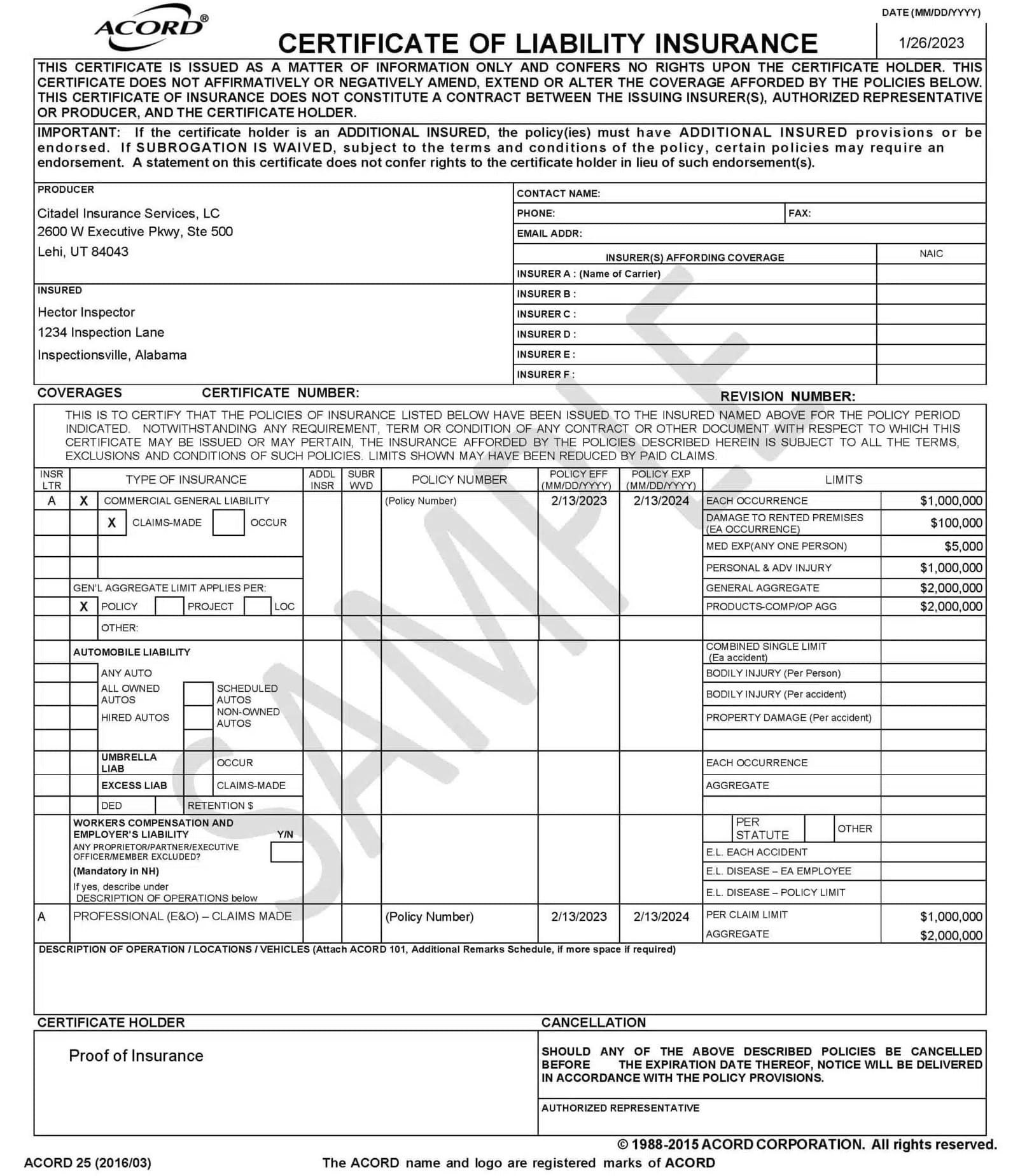
Certificate of Insurance (COI) Explained: What Businesses Need to Know
If you’ve ever signed a contract, hired a contractor, leased a commercial space, or worked with another business, you may have been asked to provide a Certificate of Insurance, commonly known as a COI.
Many business owners receive these requests and wonder what a COI is, why it’s needed, and whether it changes their insurance coverage. Understanding how Certificates of Insurance work can help businesses meet contractual requirements and avoid unnecessary delays.
What Is a Certificate of Insurance (COI)?
A Certificate of Insurance is a document that summarizes key information about a business’s insurance policies. It serves as proof that certain insurance coverage is in place at the time the certificate is issued.
A COI typically includes:
- Name of the insured business
- Insurance company information
- Policy numbers
- Coverage types
- Policy effective dates
- Coverage limits
- Certificate holder information
Think of a COI as an insurance snapshot. It provides evidence of coverage without requiring the full insurance policy to be reviewed.
Why Is a COI Important?
Many companies want to verify that the businesses they work with carry appropriate insurance coverage.
A COI can help demonstrate that a business has active insurance policies that may help protect against specific risks.
Businesses commonly request COIs before:
- Signing contracts
- Starting projects
- Leasing commercial property
- Hiring subcontractors
- Attending events
- Performing work on customer premises
Without a current COI, some contracts or projects may be delayed.
Who Typically Needs a Certificate of Insurance?
COIs are commonly requested across many industries.
Examples include:
Contractors
General contractors often require subcontractors to provide proof of insurance before beginning work.
Property Managers
Commercial landlords may request a COI from tenants to verify insurance coverage requirements outlined in a lease agreement.
Vendors and Suppliers
Businesses participating in trade shows, events, or vendor programs are frequently asked to provide a COI.
Service Providers
Professionals such as consultants, landscapers, cleaning services, and maintenance companies may need to provide proof of insurance before servicing clients.
What Information Appears on a COI?
While certificates may vary slightly, most contain similar information.
General Liability Coverage
This section may show:
- General liability limits
- Policy effective dates
- Insurance carrier information
Workers’ Compensation Coverage
If applicable, the certificate may verify workers’ compensation insurance and employer’s liability coverage.
Commercial Auto Coverage
Businesses with company vehicles may have commercial auto coverage listed on the certificate.
Umbrella or Excess Liability Coverage
Additional liability protection may also be shown if such coverage exists.
Policy Effective Dates
The COI will typically indicate when coverage begins and expires.
This helps certificate holders verify that coverage remains active during a project’s duration.
What Is a Certificate Holder?
The certificate holder is the individual or organization receiving the Certificate of Insurance.
Examples may include:
- Property owners
- General contractors
- Government agencies
- Vendors
- Clients
- Property management companies
Receiving a COI allows the certificate holder to verify that insurance coverage exists at the time the certificate is issued.
Does a COI Change Insurance Coverage?
One of the most common misconceptions is that a Certificate of Insurance changes or expands coverage.
In most cases, a COI simply provides evidence that coverage exists.
The certificate itself does not generally:
- Modify policy terms
- Increase coverage limits
- Create new coverage
- Replace policy language
The actual insurance policy controls coverage details.
What Is Additional Insured Status?
Sometimes a contract requires one party to be listed as an Additional Insured.
This is different from simply being a certificate holder.
Certificate Holder
A certificate holder receives proof of insurance.
Additional Insured
An Additional Insured may receive certain coverage rights under another party’s policy, subject to policy terms and conditions.
Because the requirements vary, businesses should carefully review contract language and discuss requests with their insurance professional.
When Should Businesses Request a COI?
Requesting proof of insurance from vendors, contractors, or subcontractors can be an important risk management practice.
Before hiring another company, businesses may want to verify:
- General liability coverage
- Workers’ compensation coverage
- Commercial auto coverage
- Appropriate coverage limits
Doing so can provide greater confidence that business partners maintain active insurance.
Common COI Mistakes
Waiting Until the Last Minute
Many projects are delayed because proof of insurance is requested too close to a start date.
Obtaining certificates in advance can help avoid unnecessary interruptions.
Providing an Expired Certificate
Insurance policies renew periodically. Always ensure that current documents are being provided.
Assuming a COI Guarantees Coverage
A Certificate of Insurance provides evidence of coverage at the time it is issued, but it does not replace the actual policy.
Ignoring Contract Requirements
Some agreements contain specific insurance requirements regarding:
- Coverage types
- Policy limits
- Additional insured status
- Waivers of subrogation
Reviewing contracts carefully can help prevent compliance issues.
How to Obtain a Certificate of Insurance
Getting a COI is typically a simple process.
Most businesses can obtain one by contacting their:
- Insurance agent
- Insurance broker
- Insurance carrier
In many cases, certificates can be issued quickly and delivered electronically.
Be prepared to provide:
- The name of the certificate holder
- Contract requirements
- Any special wording requests
- Project information if applicable
Why COIs Matter for Small Businesses
For many small businesses, a Certificate of Insurance is more than just paperwork. It can help establish credibility and demonstrate professionalism to potential clients and partners.
Having appropriate insurance and the ability to provide a COI quickly can help:
- Win contracts
- Meet vendor requirements
- Build business relationships
- Reduce project delays
- Support risk management efforts
Final Thoughts
A Certificate of Insurance is an important document that provides proof of insurance coverage and is commonly required in today’s business environment. Whether you’re a contractor, consultant, property owner, or small business operator, understanding how COIs work can help you meet contractual obligations and keep projects moving smoothly.
At Farrell Insurance Agency, we help businesses navigate insurance requirements, obtain Certificates of Insurance, and understand their coverage options. If you need a COI, have questions about Additional Insured requirements, or want to review your business insurance program, our team is here to help.
Contact Farrell Insurance Agency today to learn more about business insurance solutions and how a Certificate of Insurance can help support your business operations.
This blog is intended for informational and educational use only. It is not exhaustive and should not be construed as legal advice. Please contact your insurance professional for further information.
Categories: Blog